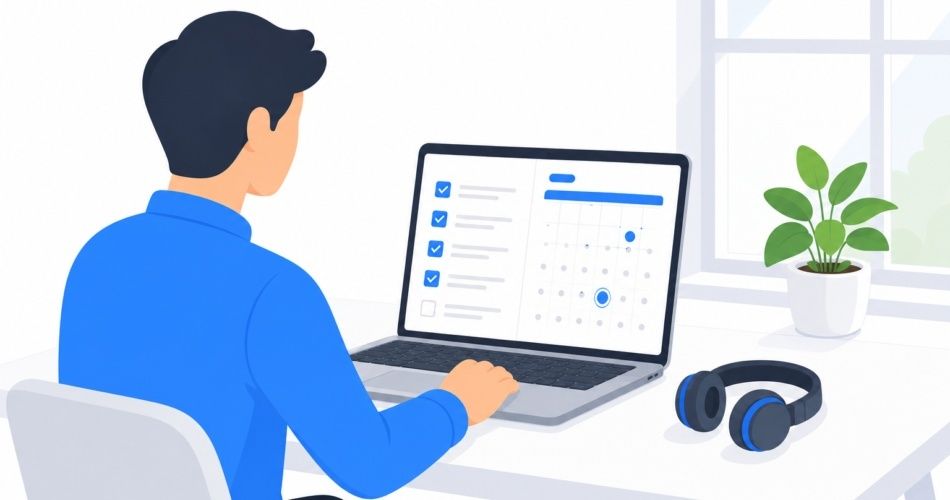
The Quiet Toll of the Daily Morning Stand-Up
Across New Zealand”s small businesses, startups, and hybrid teams, the 9am video stand-up has become an easy habit. Everyone joins the same call, takes a turn, and reports what happened yesterday and what is planned for today. It looks efficient on the calendar, particularly when the team is spread between Auckland, Wellington, Christchurch, and home offices. Yet a routine built for convenience can quietly become one of the biggest interruptions in the working day.
For many people, the morning begins with a rushed commute, family responsibilities, or a quick breakfast before the first notification arrives. Opening a video call immediately adds screen strain and social pressure before the brain has had a chance to settle into focused work. Tools that support asynchronous work offer a practical alternative, allowing routine updates to happen without requiring every person to be online at exactly the same time. The key question is simple: does a live status meeting create useful alignment, or does it make the whole team wait to exchange information that could have been written down?
Why Synchronous Status Calls Are Dragging Down Productivity
A live round-robin often rewards speed and confidence rather than careful thinking. The person who speaks first, talks most comfortably, or has the strongest presence on camera can shape the conversation, while quieter team members may offer only a brief update even when they have important context. This is a poor setting for decisions that need evidence, alternatives, or considered disagreement. As Atlassian”s guidance on async decisions explains, ad hoc meetings can encourage groupthink, blur ownership, and allow the loudest participant to dominate.
Video calls also create cognitive friction that is easy to underestimate. Participants must monitor the meeting, interpret facial expressions through a small screen, wait for audio delays, and prepare a response while listening to everyone else. Even when the subject is straightforward, sustained digital face-time consumes attention. After the call, the team may need another period to recover concentration, especially if the meeting has interrupted a writing task, analysis, coding session, or customer work.
The time cost is not limited to the scheduled 15 or 30 minutes. A distributed team member may stop meaningful work several minutes beforehand, check the agenda, deal with a connection issue, and remain mentally tied to the call afterwards. Multiply that by five or ten people, every weekday, and a short status meeting becomes a sizeable labour expense. The hidden cost is even greater when someone has only two minutes of relevant information but must wait for every other update before returning to the task at hand.
- Attention loss: frequent context switching makes it harder to sustain deep work.
- Unequal participation: fast, confident speakers can receive more influence than people who need time to reflect.
- Repeated information: updates are often shared once, then forgotten because they are not recorded in a useful place.
- Calendar drag: people organise their morning around a meeting instead of around the work that creates value.
Comparing Live Calls Against Written Check-Ins
A written check-in does not mean creating another complicated process. A shared document, project channel, or task board can hold three simple prompts: what was completed, what is next, and what is blocked. Team members add their update during an agreed window, then review the notes when it suits their workload. This creates a permanent record, reduces the pressure to remember details on demand, and gives managers a clearer view of progress over time.
| Live stand-up | Written check-in |
|---|---|
| Requires everyone to attend at one time | Allows updates within a defined response window |
| Relies on memory and verbal summaries | Creates a searchable record with links and detail |
| Can favour the quickest or loudest voices | Gives each person equal space to contribute |
| Often interrupts the strongest focus period | Protects mornings for concentrated work |
| Roadblocks may be discussed without clear ownership | Blockers can be assigned, tracked, and escalated deliberately |
| Useful information can disappear when the call ends | Decisions and follow-up actions remain accessible |

The wellness benefit is practical rather than theoretical. Removing a compulsory early video call gives staff more breathing room at the start of the day. They can take a proper break, complete a short physical routine, prepare children for school, or begin a demanding task without watching the clock. Written updates also make it easier to accommodate different working patterns, provided expectations are clear and no one is expected to reply instantly. The aim is not to make people permanently available. It is to replace forced simultaneity with dependable visibility.
A Four-Step Framework to Move Routine Updates into Shared Docs
The transition works best when it is treated as a small operating change rather than a grand transformation programme. Start with the tools already in use. If the team lives in Microsoft Teams, use a channel and a pinned template. If work is managed in Slack, create a dedicated update thread. A shared Google Doc, Notion page, project board, or repository may suit another team. The best system is the one that people can open quickly, understand immediately, and maintain without administrative fuss.
- Create a short template: ask each person to record completed work, the next priority, and any blocker. Add links to relevant tickets, files, or customer notes rather than copying large amounts of background information.
- Set a response window: choose a practical period, such as updates by 10am and review by midday. This provides coordination without implying that every message deserves an immediate reply.
- Give blockers an owner: require each roadblock to name the person who needs to act, the help required, and the point at which escalation is appropriate. Avoid turning every blocker into an impromptu group call.
- Review and adjust: after two weeks, check whether work is moving, whether important risks are visible, and whether any issue genuinely needs a live discussion. Keep the process that helps and remove the rest.
Documentation ownership matters. A shared page becomes unhelpful when everyone assumes someone else will keep it accurate. Assign responsibility for maintaining the template, checking unresolved blockers, and archiving old updates. That does not mean one manager writes everyone”s status report. It means the system has a custodian who can spot gaps and improve the process.
Leaders also need to model the behaviour they want. If written updates are due by 10am but a manager starts chasing people at 9.05am, the team will quickly learn that the stated flexibility is not real. Protecting the morning means protecting it from unnecessary direct messages, surprise calls, and status requests as well. A calm start can support better concentration, more sustainable energy, and a healthier separation between work and personal responsibilities.
Saving Real-Time Conversations for What Actually Matters
Removing the daily stand-up does not mean banning meetings. Live interaction remains valuable when the work depends on rapid exchange, emotional nuance, or shared exploration. Creative brainstorming, sensitive performance conversations, urgent incident response, customer escalation, onboarding, and complex interpersonal support are stronger candidates for a call. The test should be whether real-time presence changes the quality or speed of the outcome, not whether a meeting has always appeared on the calendar.
- Use a live session for: complex problems with several interacting variables, difficult conversations, collaborative ideation, and genuine emergencies.
- Use written communication for: routine progress reports, simple approvals, reference information, project decisions, and questions that do not require an immediate answer.
- Use a hybrid approach for: a documented proposal followed by a short discussion only if written feedback identifies disagreement or uncertainty.
Fewer meetings can improve morale because employees experience greater control over their day. That is particularly important in hybrid workplaces, where a person may already be managing home distractions, variable internet connections, commuting days, or responsibilities across different time zones. Practical advice on running better remote meetings still applies when meetings are necessary: use a clear agenda, invite only the people needed, assign ownership, and record decisions and next steps.
The broader culture should be built around outcomes rather than visible busyness. A person who contributes a careful written analysis at 11am may be adding more value than someone who attends every call and provides rapid but shallow updates. Clear goals, sensible deadlines, and accessible documentation create trust without demanding constant proof of activity. Real-time meetings then become purposeful moments for collaboration, not daily evidence that everyone is online.
Reclaim Your Team Energy and Morning Focus
Replacing the habitual 9am stand-up with a structured written check-in can reduce daily screen exposure, improve the quality of information, and make responsibility easier to follow. It gives thoughtful contributors room to explain progress, provides managers with a lasting source of truth, and makes blockers visible without pulling the entire team into a discussion. Just as importantly, it signals that focused work and personal well-being are legitimate parts of a productive day.
A two-week trial is enough to test the idea without creating unnecessary risk. Keep the old meeting off the calendar, introduce a three-question template, define the update and review windows, and track only a few measures: missed dependencies, unresolved blockers, delivery progress, and team feedback. If a particular issue needs discussion, schedule a targeted conversation rather than restoring the full daily call. For Kiwi teams seeking a calmer and more sustainable way to work, the most useful meeting may be the one that no longer needs to happen.
